
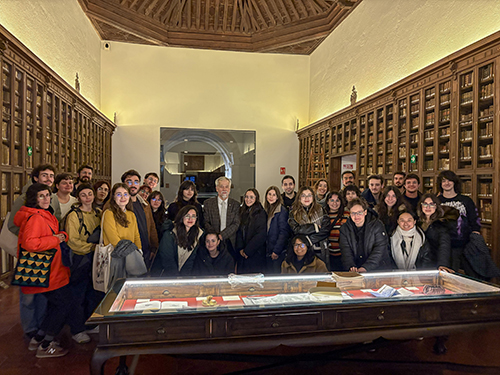
Dr. Prof. Gloria Lapeña Gallego | University of Granada (Universidad de Granada), Spain | Libraries and Artist’s Books: Reflections on the International Artist’s Book Triennial Vilnius.
Abstract: Since the International Artist’s Book Triennial Vilnius began in 1997 under the direction of Kęstutis Vasiliūnas, 1,975 artists from around the world have submitted some 4,000 works across its ten editions. These editions have given rise to numerous exhibitions, accompanied by workshops, lectures and symposia. The exhibition of the tenth edition at the University of Granada’s Biblioteca del Hospital Real, which brought this cultural project to a close, has led me to reflect on the library as an exhibition space for artists’ books, considering the architecture, furniture and collections of the libraries that have hosted the Triennial.
Keywords: artist’s book; International Artist’s Book Triennial Vilnius; library; exhibition space.
The International Artist’s Book Triennial Vilnius (1997–2026)
The International Artist’s Book Triennial began in the Lithuanian city of Vilnius, where its first edition was held in 1997 under the direction of professor, artist and curator Kęstutis Vasiliūnas, with the support of Circle Bokartas and the Artist’s Book Museum Vilnius. Over the following twenty-nine years, ten editions have taken place, sharing certain enduring features, such as the creation of artists’ books around a common theme, the participation of artists of different nationalities, and a series of limited-edition catalogues that have retained their original format and hand-crafted bindings. The themes were “Diary: Eight Days” (1997), “Apocalypse” (2000), “23 Sins” (2003), “Rabbit & House” (2006), “Text” (2009), “Love” (2012), “Error” (2015), “Memento Mori” (2018), “Absence” (2021) and “To Be” (2024). Most have religious and ethical undertones, while remaining open to interpretation and giving rise to works in a wide variety of formats and materials.
The history of the Triennial allows us to trace the evolution of artistic approaches to the artist’s book and to examine the characteristics of the spaces where the works have been exhibited. As the Triennial has gained greater visibility and recognition, the number of venues has grown from a single site for the first edition, the Kairė-Dešinė Gallery in Vilnius, to a travelling programme across different cities and countries, with eight exhibitions in the eighth edition (2018) and nine in the tenth (2024). The ninth edition (2021), titled “Absence”, was conceived as a conceptual art project without physical exhibitions, with its symbolic location designated as Nowhere. From the fourth edition (2006) onwards, some of the selected books were also shown at international book fairs, including those in Leipzig and Seoul, while maintaining the non-commercial character that has defined the project from the outset. The travelling programme has also depended on the collaboration of individuals and institutions in different countries, who have provided venues and helped organise the events.
It is worth noting that, in the eighth and tenth editions, three and four of the respective exhibition venues were libraries. The first libraries to host the Triennial, in its eighth edition, were the Martynas Mažvydas National Library of Lithuania in Vilnius; the Plungė District Municipal Public Library, also in Lithuania; and Reed Library at the State University of New York at Fredonia (United States). The tenth edition reaffirmed the role of libraries as exhibition venues. Alongside two returning venues from the eighth edition (the library in Plungė and Reed Library in Fredonia), the Kunst- und Museumsbibliothek in Cologne (Germany) and the University of Granada’s Biblioteca del Hospital Real (Spain) joined the itinerary.
Libraries as Exhibition Spaces
Libraries are natural settings for artists’ books because of their long association with books. They also commonly have display cases used to show items from their collections or new publications. These cases can accommodate works of different kinds while helping to protect them. Most of the works are unique pieces entrusted by their makers to a travelling exhibition that may run for almost two years, with Kęstutis Vasiliūnas transporting them between venues, where they may remain for several months. Their protection is therefore essential, even when this restricts visitors’ ability to handle them. The number and size of the available display cases consequently influence which works can be shown at each venue.
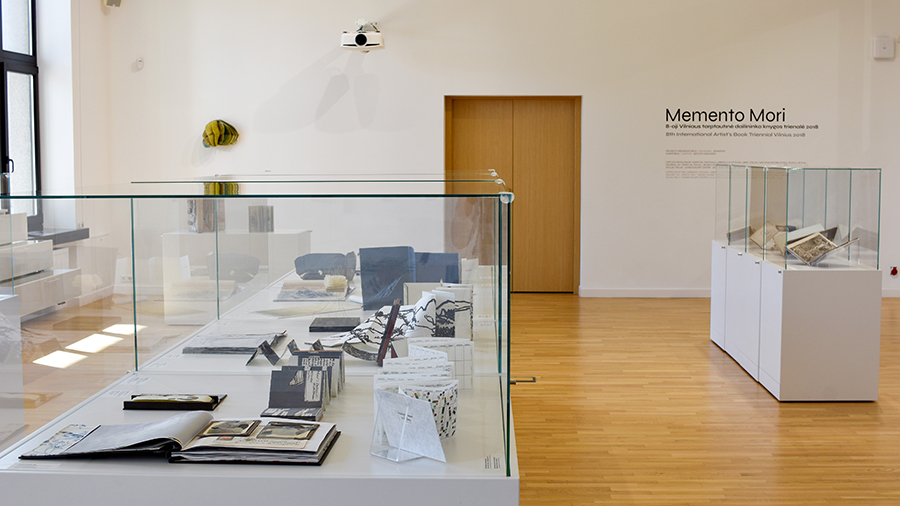
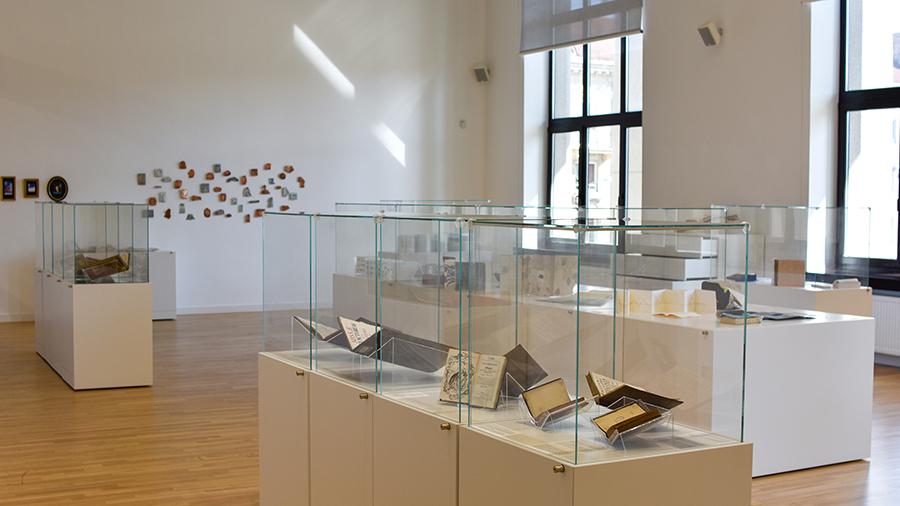
The eighth edition, “Memento Mori”, was held in 2018 in the Main Gallery on the third floor of the Martynas Mažvydas National Library of Lithuania in Vilnius. The library is named after the author of the “Catechism” (1547), regarded as the first book printed in Lithuanian; the first Triennial was dedicated to the 450th anniversary of its publication. The works were displayed in glass cases in a spacious gallery with white walls and a wooden floor (Figures 1 and 2). Although the gallery was separate from the reading and study areas, artists’ books were displayed alongside a selection from the library’s historical collections, specifically sixteenth- to nineteenth-century publications concerned with death, including ars moriendi treatises, funeral sermons and missals for the dead. According to Sprindžiūnienė (2018), many artists had incorporated texts and symbols from earlier periods into their works, creating new metaphors through words and images. She also notes that some artists’ books whose forms recalled traditional ritual objects were deliberately placed alongside these historical publications.
Photograph by Kęstutis Vasiliūnas.
Photograph by Kęstutis Vasiliūnas.
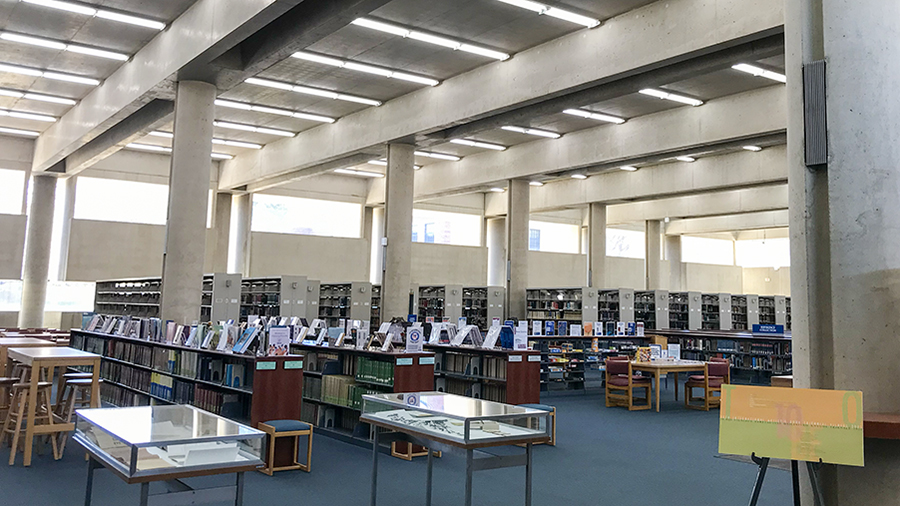
At Reed Library, State University of New York at Fredonia (United States), which hosted the eighth and tenth editions of the Triennial, and at the Kunst- und Museumsbibliothek in Cologne (Germany), a venue for the tenth edition, display cases were placed among the shelves and in reading and study areas without interrupting the libraries’ everyday activities (Figure 3). Both exhibitions at Reed Library were locally coordinated by Timothy
Frerichs, a professor at the State University of New York at Fredonia specialising in artists’ books and paper art. The Kunst- und Museumsbibliothek in Cologne holds a collection known as Buchkunst [book art], comprising more than 6,000 items from the twentieth and twenty-first centuries, including artists’ books, book objects and artistic bindings, which are presented to the public through temporary exhibitions. The Triennial was held in the library’s spaces within the Museum Ludwig building, with display cases in circulation areas, some of them integrated into the bookshelves (Figure 4).
Photograph by Kęstutis Vasiliūnas.
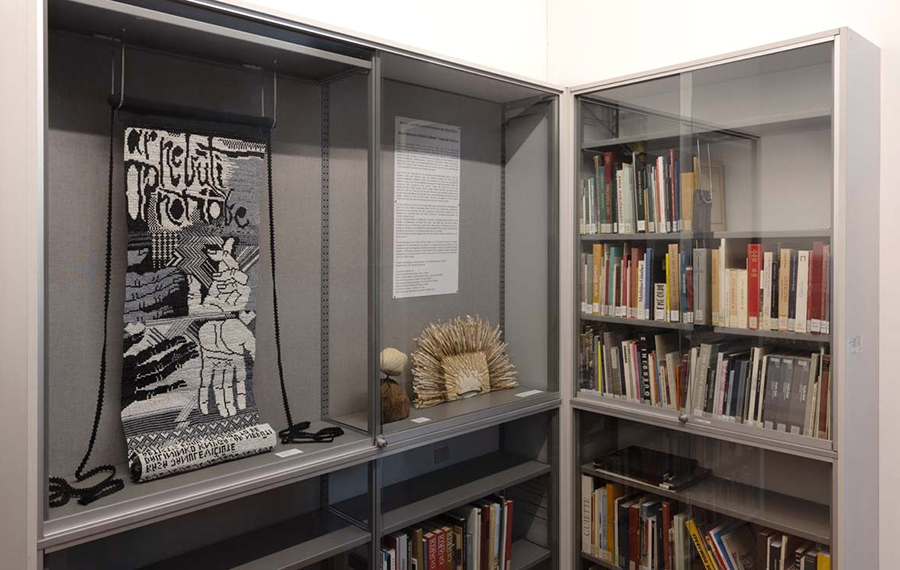
Photograph: Historisches Archiv mit Rheinischem Bildarchiv, Juli Held, rba_d065105_04.
From 25 September 2025 to 23 January 2026, the Biblioteca del Hospital Real displayed forty-four of the seventy-seven works selected for the tenth edition of the Triennial. The library houses the University of Granada’s historic book collection, which was moved to this building in 1980. Founded by the Catholic Monarchs in 1504, the Hospital Real has served many purposes over the centuries, including as a hospital, a residential home for older people, a psychiatric institution, a poorhouse, a prison and, finally, a university building. The library occupies a monumental space with large, pointed arches and decorated wooden ceilings. Its walls are lined with shelves holding thousands of volumes printed between the sixteenth and nineteenth centuries. The shelves reproduce those of the former library of the Colegio de San Pablo, where the collection was previously housed. The library is used for reading, study and research, and it periodically organises exhibitions to showcase its bibliographic heritage.
The Triennial occupied one of the arms of the library’s upper cruciform space and its central area. Six wooden table display cases, normally used to exhibit historic books, were arranged along this arm (Figure 5). Their internal lighting stood out in the dimly lit room, drawing visitors’ attention to the artists’ books and allowing them to view the open pages from above (Figure 6). Four freestanding cases with metal frames and transparent panels, more contemporary in appearance, were placed in the central space enclosed by the large stone arches. The larger, three-dimensional works were displayed vertically in these cases, allowing their volume to be appreciated from different viewpoints. One work, “Or Not To Be” (2024) by Rasa Janulevičiūtė, a long, narrow piece made from thread and glass beads, was hung from one of the room’s windows. Beside the first table display case, a screen showed images from the exhibitions held during successive editions of the Triennial, in chronological order (Figure 7). Visitors moved from case to case, pausing before the works and trying to discover their contents through open pages, unfolded structures, visible materials and the detailed descriptions on the labels.
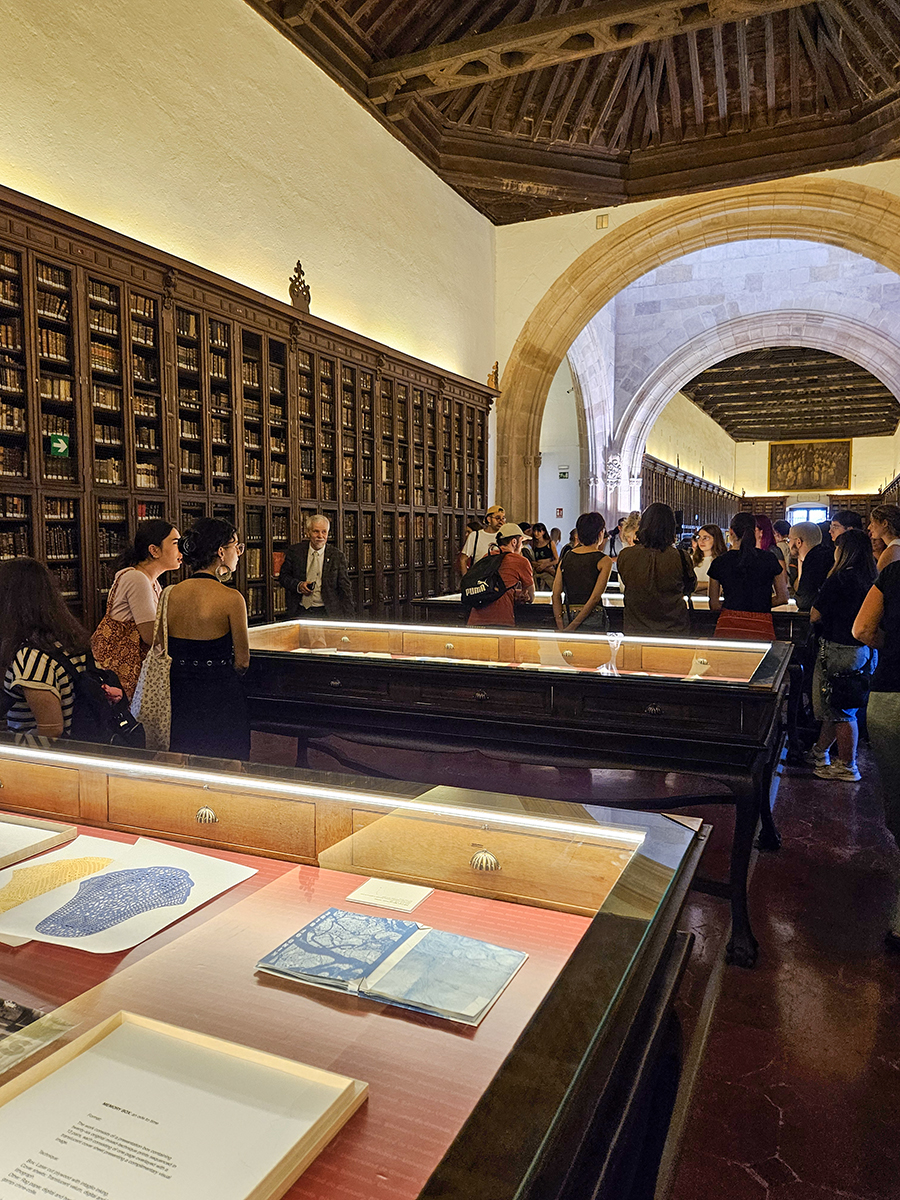
Photograph courtesy of the Biblioteca del Hospital Real, Granada.
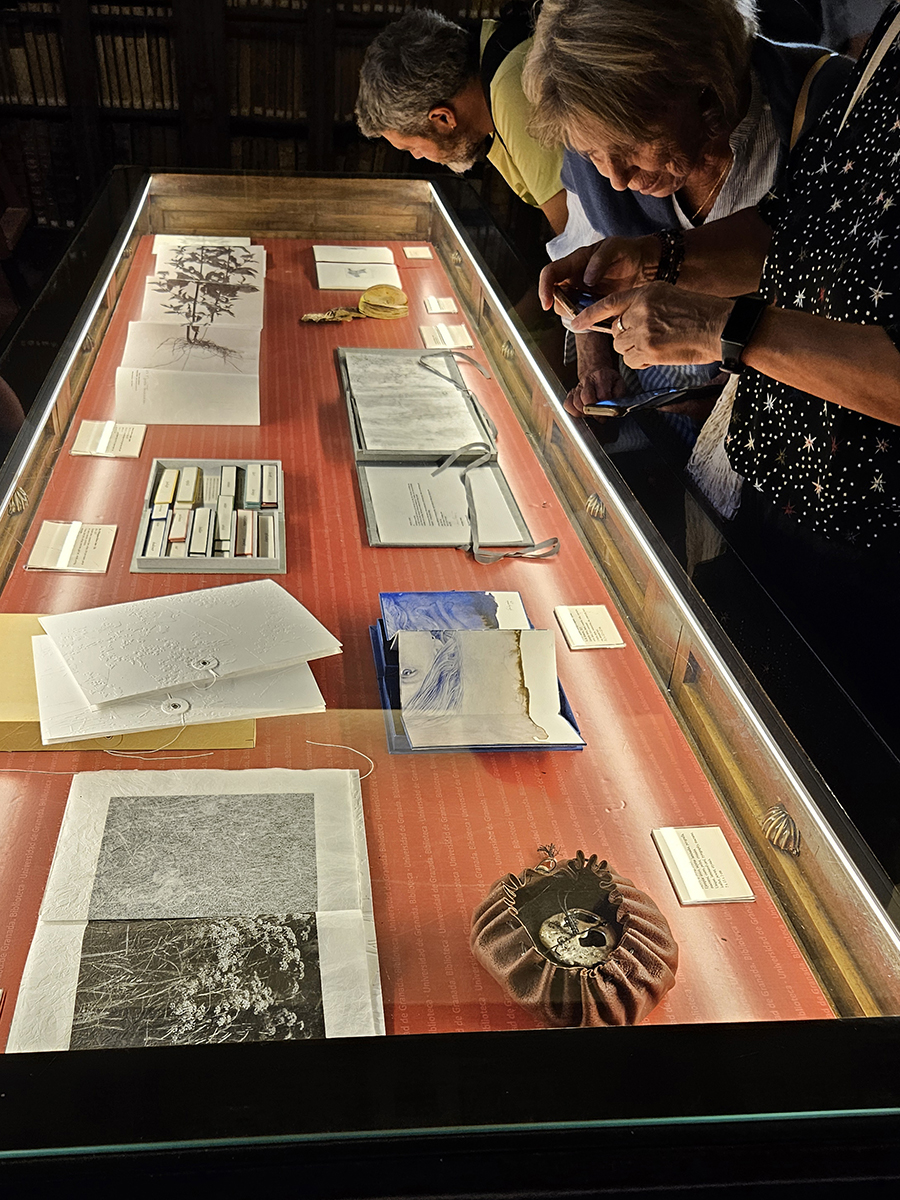
Photograph courtesy of the Biblioteca del Hospital Real, Granada.
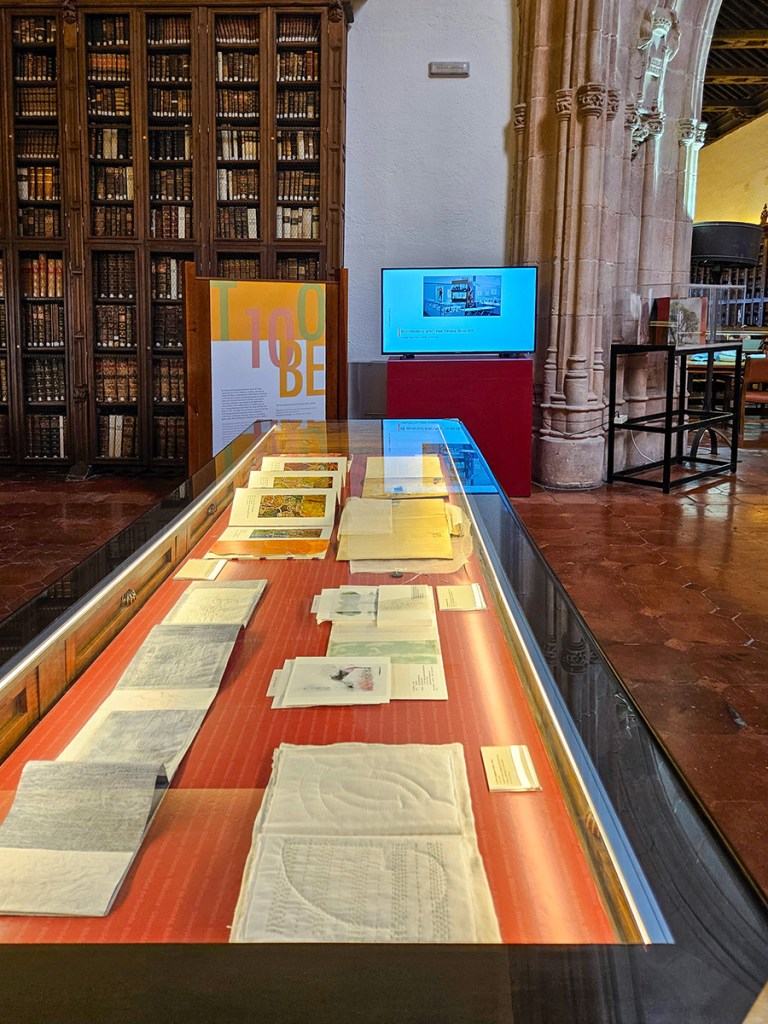
Photograph courtesy of the Biblioteca del Hospital Real, Granada.
This was the first time the library had hosted an exhibition devoted to contemporary artists’ books. It does, however, have a history of exhibitions featuring works from its older collections that draw attention to the books’ physical qualities. In Tesoros [Treasures] (2017), which featured manuscripts, early printed books and unusual volumes, those qualities helped bring out their historical and heritage value. In Malheridos: la huella del tiempo en los libros de la Biblioteca Universitaria [Wounded Books: The Mark of Time on the University Library’s Books] (2022), the visible traces of damp, fire, censorship and removed pages became the central theme, drawing attention to the vulnerability of books and the historical, social and political circumstances that had shaped their lives.
Closing of the Triennial
My involvement with the International Artist’s Book Triennial Vilnius began when Kęstutis Vasiliūnas first visited the University of Granada in 2024 to take part in a teaching innovation project. That meeting led to the possibility of hosting the tenth edition at the Biblioteca del Hospital Real, for which I took on the role of local coordinator. The choice of venue was partly a matter of chance, arising from the circumstances of our collaboration, and partly deliberate, given the undeniable appeal and heritage value of this university building. With the closing of the exhibition in Granada, the tenth edition came to an end, and with it the International Artist’s Book Triennial Vilnius itself, as Vasiliūnas announced at the opening (Figure 8).
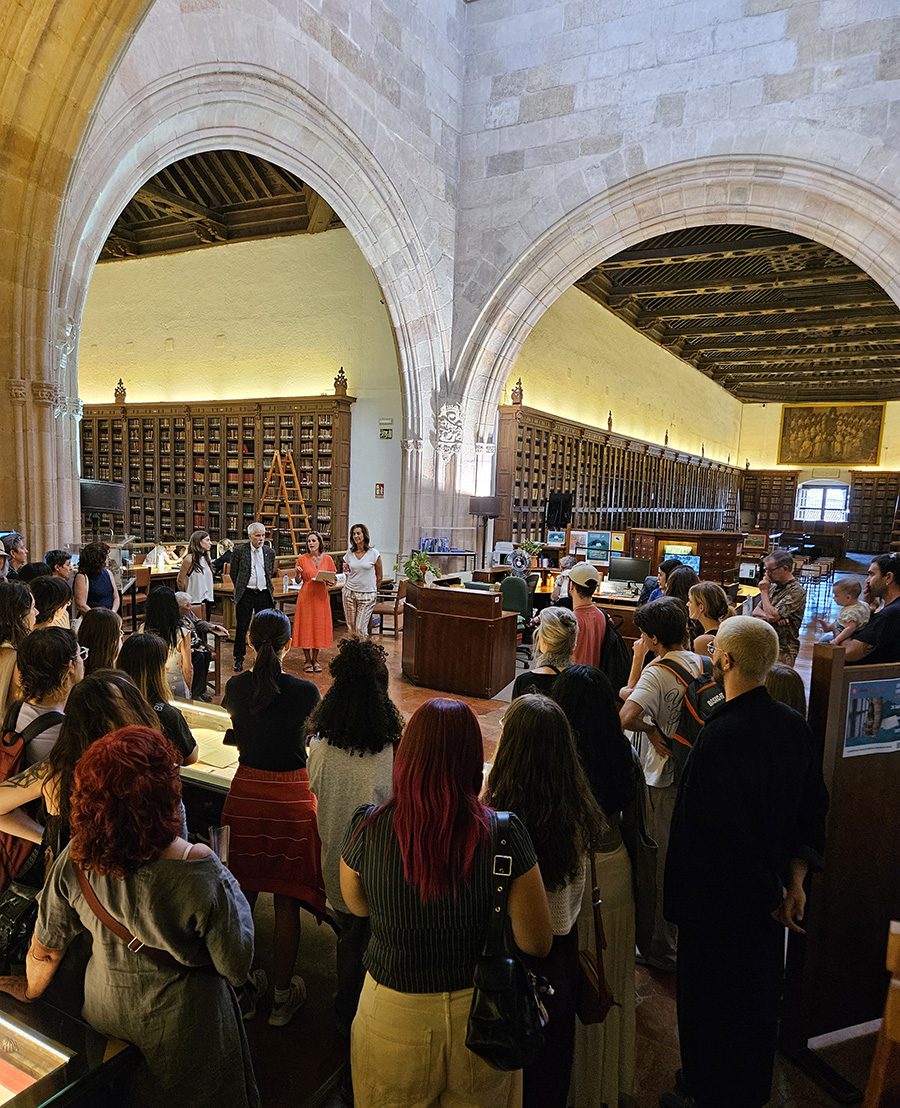
Photograph courtesy of the Biblioteca del Hospital Real, Granada.
For four months, the library enveloped a collection of artists’ books in an atmosphere of silence. Under the theme “To Be”, these works responded to unsettling existential questions posed to the artists by Vasiliūnas. To be or not? And how to be? How to exist at all, when sometimes there is more evil than good? Is it still possible to be human in the context of our times? Each artist offered an open-ended response to these questions, presented to visitors in a setting conducive to reflection. At the same time, I found myself asking other questions. What accounts for the growing presence of libraries as Triennial venues: chance, or a choice that seems obvious? How does this “artistic intrusion” coexist with the everyday activities of a library? To what extent does a display case change the way we look at a book? Can a library offer new ways of interpreting a contemporary artwork?
Libraries are places imbued with meaning, where books are part of their identity and everyday activities. Their architecture and furniture influence how the artworks are arranged, as they must adapt to the characteristics of each setting. Exhibiting the works in display cases is necessary for their protection but prevents visitors from handling them. Each book must therefore be carefully placed to give visual access to its contents. The presentation of the works may also reflect the artists’ own decisions. During the installation at the University of Granada’s Biblioteca del Hospital Real, for example, one of the artists’ books, consisting of sheets with collages, was accompanied by instructions on how to arrange the different pieces and place small silicone supports to create varying levels of relief. Another artist requested that her book be displayed open at a different double-page spread from the one initially selected.
Some libraries hold collections from different periods, including illuminated manuscripts, books with distinctive bindings and volumes bearing traces of their own histories. Certain items from these holdings are exhibited and appreciated for their qualities as objects, as well as for their content. This interest in material qualities also extends to contemporary artists’ books, which some libraries have incorporated into their collections, as is the case with the Kunst- und Museumsbibliothek in Cologne. The exhibition of such works can offer visitors a first encounter with pieces they may subsequently consult in greater detail. Libraries can also develop their own exhibition projects. Falconer (2013), who worked as a library assistant at Chelsea College of Art & Design, organised an exhibition for which she selected artists’ books from the library’s collections and invited five artists to present other works, some created specifically for that space.
Based on the examples of the Reed Library in Fredonia and the Kunst- und Museumsbibliothek in Cologne, I see value in integrating works into spaces normally used for consultation and reading, as this encourages chance encounters between library users and contemporary art. I found the approach taken by the Martynas Mažvydas National Library of Lithuania particularly successful because, despite having a separate exhibition space, it established connections between works from different periods and allowed visitors to appreciate contemporary art through an understanding of older books.
Dr. Prof. Gloria Lapeña Gallego
University of Granada (Universidad de Granada), Spain
References
Falconer, V. (2013). ‘Some undisclosed points of remove’: Reflections on a library exhibition. The Blue Notebook, 8(1), 23–27.
Sprindžiūnienė, J. (2018). On this side of the unknown. Artist’s Book Creators. https://artistsbook.lt/blog/2018/09/12/8th-artists-book-triennial-in-vilnius-on-this-side-of-the-unknown/
© Text: Gloria Lapeña Gallego 2026
© Artist’s Book Museum 2026